
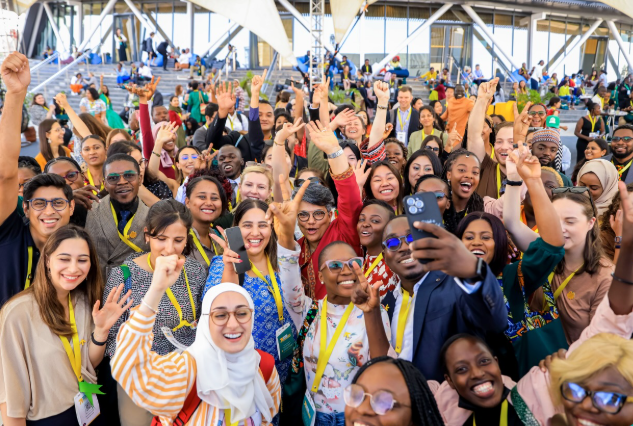

By Jenny Davidson, CEO CSMC
It was a landmark moment of concerted collective action to advance gender equality, and a significant privilege for CSMC to attend the Women Deliver conference held in Melbourne over 27-30 April.
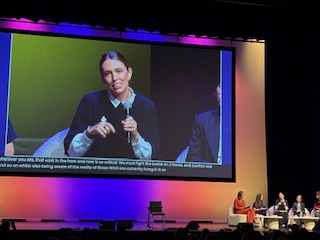
Over the four days, 6,123 delegates from 189 countries – women, gender-diverse people and a few men – gathered on the unceded lands of Naarm, taking up every corner of our huge convention centre from the massive exhibition hall to the many meeting rooms.
It was the world’s largest gathering of gender equity advocates, and the first time it was co-hosted, with Australia sharing the role with our Pacific neighbours, collectively dubbed Oceanic Pacific – and the need couldn’t be more pressing.
We live in a world in which 122 million girls globally are not in school and 12 million girls are married before age 18; where over 60 million women and girls are currently displaced as refugees worldwide, at heightened risk of gender-based violence, trafficking, and curtailed hope; where more than one woman a week is killed by violence in Australia; and despite ranking second in the world for medium wealth, ever increasing numbers of single mother families are locked out of all forms of housing including public, rental or home ownership.
We know the status quo is not working. We know we need different forms of leadership, from grassroots up to the most powerful people on the planet. This was an opportunity to examine what that could – and does – look like and to map a path of forward despite the overwhelming challenges. Hope was visceral, despite the global chaos.
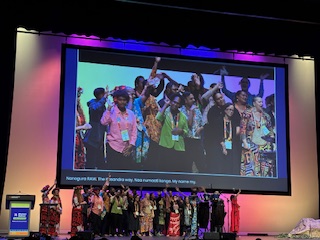
Over four jam-pack days, delegates dissected and examined issues and barriers, multilateral systems such as the UN, and solutions – from grassroots resistance and community responses to feminist leadership at all levels. Often, I wanted to be in all the sessions happening at any given time!
Speakers in plenaries and workshops did not hold back on the failings of the UN system and global decision makers, the impacts of conflict on the bodies and lives of women and children, the power of storytelling and indigenous-led responses, and the ongoing need for recognition of Indigenous rights, decolonisation, solidarity, strategy and perseverance.
With the world in ever-greater upheaval, the rage and grief were tangible. I was particularly moved by a plenary panel featuring an incredible young Rohingya human rights advocate working globally in overcrowded refugee camps, a Palestinian activist holding the EU to its obligations, and a queer Afghan refugee observing generations of her family unable to return home; all three made manifest the failings of national and international governments and framed the UN protection frameworks as not just failing women, but actually as functioning just as designed: to uphold the status quo.
With them on the stage was Jacinda Ardern, former Prime Minister of New Zealand, who made a strong case that authentic leadership could still drive change from within systems of power, much as that is dramatically missing today.
Powerful sessions on valuing care, paid and unpaid, in our economies took place along a multitude of examinations of conflict, climate impacts, health, youth, and economic levers. Diverse lens of decolonisation, local context, and collective response were examined.
The question was raised again and again about funding for gender equality, and who holds the ‘purse strings’ even as the world changes. Feminist leadership was put under the microscope: what does it mean, how do we embody it? Local issues were connected with collective imagining, visioning, actioning, and power.
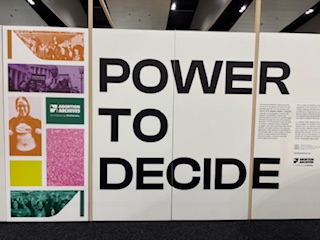
Our Wurundjeri hosts made the delegates welcome throughout and were honoured by leaders from the Pacific in the closing ceremony. In my 25 years working in gender equity, this was the most inclusive feminist space I have encountered, one that centred the voices and knowledge of First Nations leaders from around the world, and it was suitably humbling as a white feminist advocate.
The conference concluded with launching the Melbourne Declaration for Gender Equality, developed in the lead up to Women Deliver with hundreds of consultations and refined throughout. At the close of the conference, it had 400 endorsements, including almost 200 organisations, and a few countries, but disappointingly not Australia. The ambitious Declaration holds states to their obligations to their people, confronts economic injustice, stands against militarism, and founds these principles in solidarity.
For CSMC, a signatory of the Declaration, this means progressing tangible actions such as holding the Victorian government to their obligation to house all their residents, ensure their safety, and advance the rights of all children to full future participation in our community.


0 Comments