
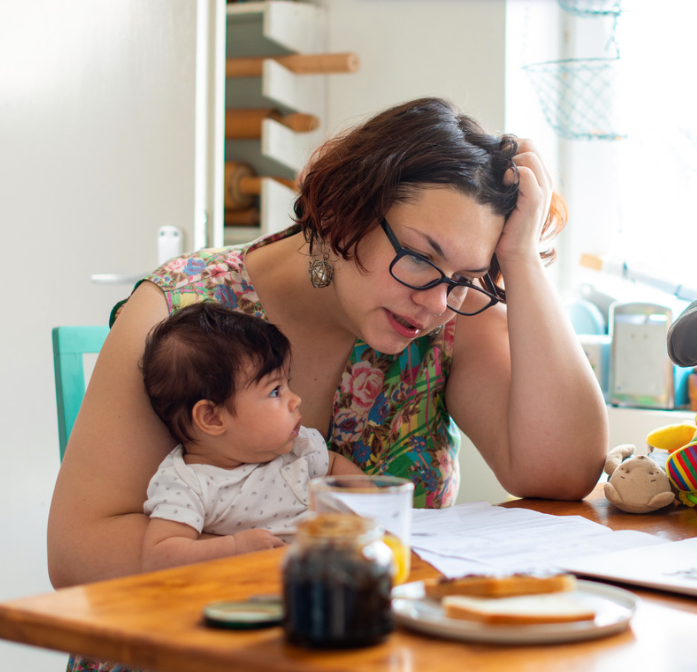

When Emma* separated from her son’s father, she expected that raising their child would at least come with some shared financial responsibility. Instead, she says she quickly found herself navigating a system in which asking for child support could have consequences far beyond money.
Her former partner encouraged her to accept payments directly from him rather than having Services Australia collect the money. He promised he would contribute regularly and told her there was no need to involve the agency. Emma, keen to keep the relationship amicable, agreed. But the promised payments became increasingly irregular and eventually stopped altogether.
Emma says she continued to be assessed for government support on the basis that child support was being paid, leaving her in debt and managing financial uncertainty. She considered switching to agency collection but says she feared that pursuing the money could trigger a dispute over their son’s care or lead to further intimidation.
A system that leaves single mothers out of pocket
Emma’s experience highlights a broader problem facing single-parent families: when child support is not paid, mothers can lose both the financial support owed to their children and government assistance calculated on the assumption that those payments have been received.
Services Australia assumed that Emma was receiving child support when she was not and then calculated her Family Tax Benefit on that. And she is far from alone. The government’s Survey of Separated Parents, which was commissioned by the Department of Social Services and released in late June, found that more than half of parents receiving child support through Private Collect were being underpaid, while one in four received no payment at all during the year.
Government data shows that around half of families receiving child support, representing about 500,000 children, use Private Collect.
The survey also found that almost one in five parents using the arrangement had agreed to Private Collect to avoid conflict with, or violence from, a former partner.
For families experiencing domestic and family violence, child support can become more than a financial issue. The Commonwealth Ombudsman’s investigation into the child support system found that financial abuse can be used to manipulate and control former partners, with the effects amplified by the way the system operates.
The Federal Government has announced $183 million in its latest Budget for changes to the child support scheme, described by Social Services Minister Tanya Plibersek as the biggest reforms since the system was introduced.
From 1 July next year, Departure Prohibition Orders are also due to be automatically issued to people with child support debts of at least $10,000 who have a recent history of overseas travel.
But CSMC and other advocacy groups say further reform is needed.
Children are the ones missing out
The financial consequences of unpaid child support are significant. A 2025 Commonwealth Ombudsman investigation found that more than $1.9 billion in child support was outstanding across Australia.
Terese Edwards, chief executive of Single Mother Families Australia, told the ABC last week that the consequences ultimately fall on children and the parents caring for them.
“When child support isn’t paid, or Family Tax Benefit is cut unfairly, a child misses out,” she said. “It means parents — usually mothers — are often faced with a situation where they cannot pay rent, buy groceries or cover school expenses.”
A system in need of change
CSMC and other organisations are calling for significant changes to be made to the child support system. Single Mother Families Australia is calling for the link between child support and Family Tax Benefit to be broken, and mothers to not have their government payments reduced based on child support they have never received. They also want Agency Collect to become the default, stronger enforcement of unpaid child support, family violence to be built into the system’s design, and the Commonwealth to guarantee payments before pursuing parents who fail to pay.
CSMC will keep you updated on this campaign: If you haven’t already, follow us on Facebook, Instagram and LinkedIn, and make sure you are subscribed to our fortnightly newsletter, Stronger Together.
If you or someone you know needs support
If you are in immediate danger, call Triple Zero (000).
Women experiencing family and domestic violence can contact:
- Women’s Crisis Line: 1800 811 811
- 1800RESPECT National Helpline: 1800 737 732
- Men’s Referral Service: 1300 766 491
- Kids Helpline: 1800 55 1800
- Lifeline: 13 11 14
Remember, CSMC’s Support Line is here for you. You don’t have to wait until things feel overwhelming before you call. Whatever you’re navigating, we’re here to listen without judgement, provide practical support, and help connect you with the information and services that can make a difference.
*Emma is a pseudonym used to protect her identity.

0 Comments